14 July 2026
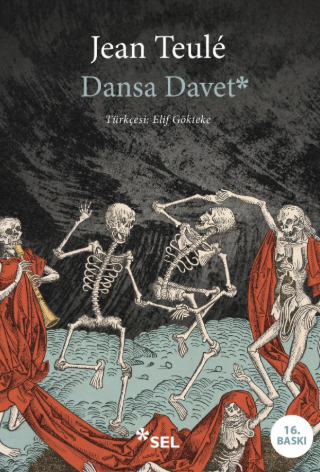
The Unhelpless Rebellion of the Body: Jean Teulé’s Novel "The Dance" and Mass Hysteria
French author Jean Teulé’s novel The Dance (Dansa Davet) deals with a real-life mass hysteria case that took place in Strasbourg in 1518, known in history as the "Dancing Plague." Triggered by the severe socio-economic crises of the period, this shared trauma offers a striking case study for psychology students and academics to examine the relationship between bodily reactions, mental dissociation, and crowd psychology.
Based entirely on historical archives, Jean Teulé’s The Dance recounts a true epidemic that spread in July 1518 in Strasbourg when a woman suddenly began dancing alone in the street. Spreading to hundreds of people in a short time and leading to the deaths of some due to physical exhaustion (heart attack, dehydration), this event is not fiction; it is one of the most clearly documented cases of mass psychogenic illness (mass hysteria) in history.
The Zeitgeist of the Period and Triggering Factors
At that time, the people of Strasbourg were suffering under extreme poverty, famine, epidemics, and the intense sinfulness and fear propaganda of the Catholic Church. This accumulated shared trauma, intense anxiety, and helplessness broke down individual defense mechanisms, leading to a bodily outburst.
Academic Benefits of the Book:
-
Conversion and Dissociation: It concretizes how psychological pain transforms into bodily symptoms (involuntary dance motor movements) when it cannot be expressed verbally, as well as trans-like states of mental detachment.
-
Crowd Psychology: It demonstrates how intense stress and panic spread from the individual to the group through a mechanism of "psychological contagion," evolving into a shared mania.
-
Cultural Psychiatry: It provides insight into how mental disorders are shaped by the belief systems (such as the curse of Saint Vitus) and the socio-cultural climate of the era.
For psychology students and academics, this work offers a unique clinical reading alternative that illustrates how theoretical knowledge manifests on a social and historical scale.
Prepared by: Res. Asst. İrem Uyar